How to Know Your Security Guard Is
Actually on Post
The six hours nobody notices
Late tonight, somewhere between the Edens and the Tri-State, a security officer will spend six hours sitting in a parked car. The heater will stay on. At the close of the shift, the patrol rounds on the clipboard will all be completed neatly.
The plant manager won’t learn about it. Not until morning, when a shipping supervisor discovers a loading dock door left propped open all night, a pallet of finished product is missing, or a catalytic converter has disappeared from a truck in the back lot. After that, the questions begin, and the only evidence is a handwritten sheet.
If you manage a plant, warehouse, or distribution center anywhere from Waukegan to Elk Grove Village, you are paying for overnight coverage you almost never see. That is worth considering.
Why most guard contracts run on trust
To be fair to the industry, most security officers do their jobs. The issue is not the people. The issue is that the old method for showing coverage was never designed to prove anything.
A paper patrol log captures what an officer wrote down, not where the officer truly was. A supervisor may make one visit per night, usually at a predictable time. Post orders are handed out on day one and then put away. Meanwhile, the client typically sees nothing unless something goes wrong.
As a result, the contract rests on faith. You pay for eight hours of coverage and hope you received it. For a site with inventory, equipment on the floor, and trucks in the yard, hope is a weak foundation.
What verified coverage actually looks like
The technology needed to replace faith with proof has existed for years, and it is not unusual. It comes down to four elements working together.
1. Location-locked clock-in. A geofence is a digital boundary placed around your property. An officer cannot start the shift until the phone confirms they are inside it. No clocking in from a gas station parking lot two miles away.
2. Post orders acknowledged each shift. Your site instructions appear at clock-in every time, and the officer must confirm them before the shift starts. If something changes, the next officer on post sees it.
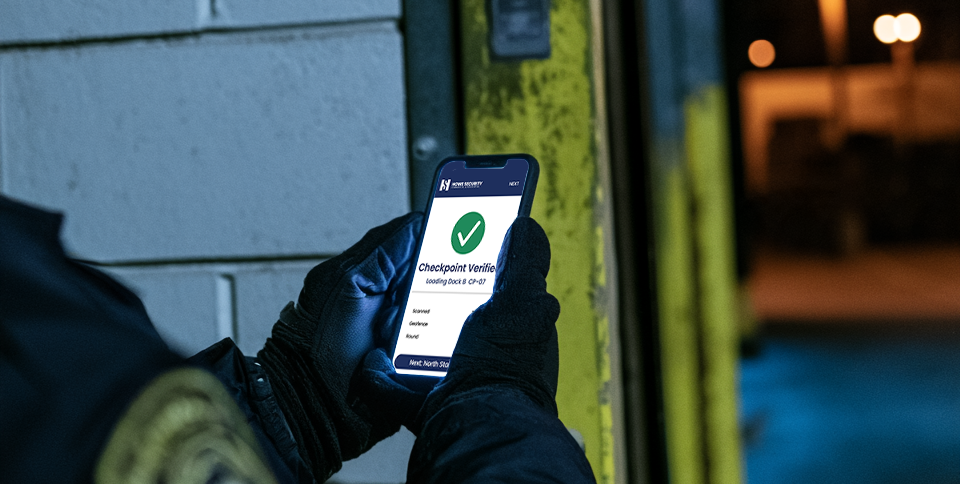
3. Checkpoint scans instead of handwriting. Small NFC tags are installed at the places that matter on your property: the loading dock, a stairwell, the roof hatch, the back lot. On every round, the officer taps a phone to each tag. Each scan is time-stamped, and it can only occur when someone is actually there.
4. Alerts when someone leaves post. If an officer exits the geofence during the shift, a supervisor is informed immediately, not the next morning.
When those pieces are combined, a shift report stops being a narrative. It becomes a record: clocked in at 10:58 PM on site, Loading Dock B at 2:14 AM, North Stairwell at 2:31 AM, six of six rounds complete, zero times off post.
Five questions to ask any security company before you sign
Whether you are renewing an agreement or comparing providers, these questions distinguish verified coverage from the paper version. A solid company will answer all five without pausing.
1. How do I know your officer arrived on time?
Look for geofenced or GPS-verified clock-in. “The supervisor checks” is not a real answer.
2. How are patrol rounds recorded?
Ask whether checkpoints are scanned or written down. Scans are time-stamped on location; handwriting can be filled in from anywhere.
3. What happens if an officer leaves the property mid-shift?
You should hear that a supervisor is alerted in real time.
4. Can I see a sample shift report?
If they cannot show one today, they likely do not produce one.
5. Who do I call at 2 a.m., and who answers?
A local company whose leadership you can actually reach is more valuable than a national call center.
How Howe Security does it
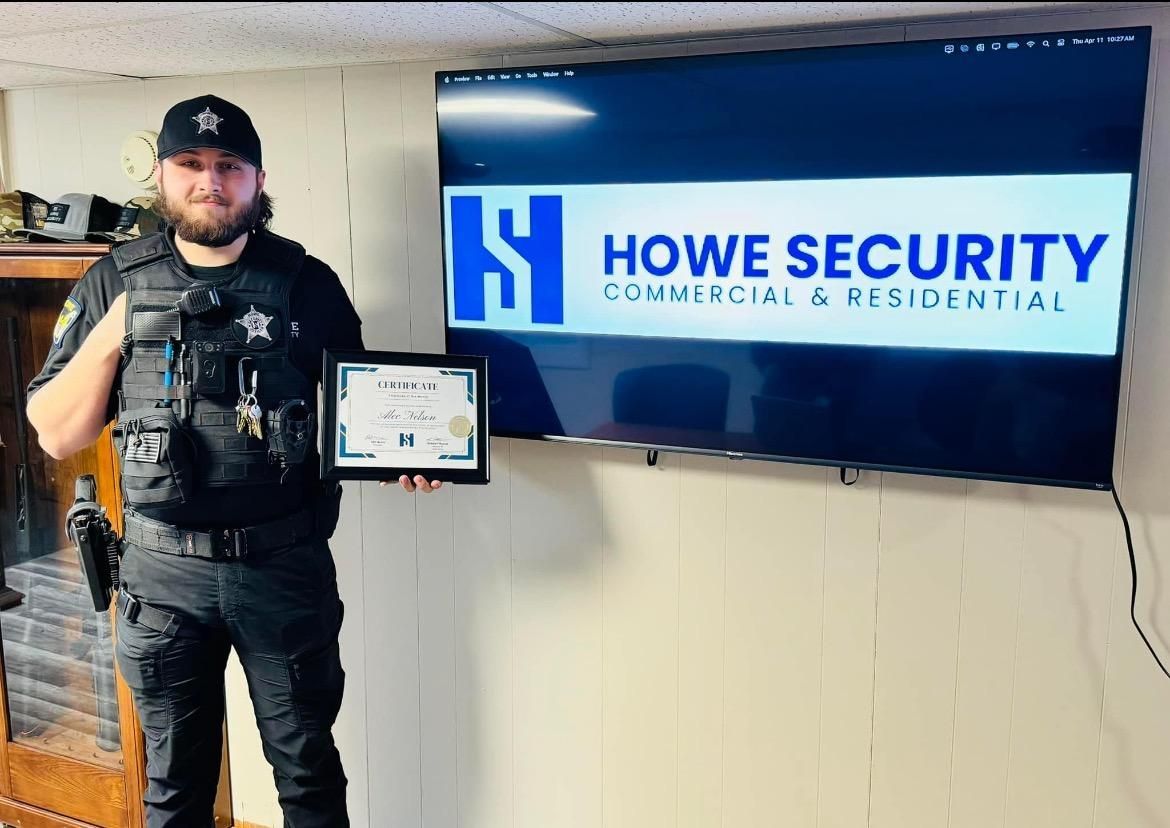
Howe Security officers use Belfry Software, a patrol platform designed around exactly this kind of accountability. Officers can only clock in once they are geofenced on your property. They acknowledge your post orders at the beginning of every shift. They scan NFC checkpoints on each round. And if anyone leaves post, a supervisor is notified immediately.
The tools are newer than the company. The standard behind them is not. Charlie Howe founded Howe Security in Lake Bluff in 1967 after serving as a Green Beret in the U.S. Army’s 5th Special Forces, and he later served as a Lake Bluff Police lieutenant. Doing what you said you would do, where you said you would do it, was the expectation long before anyone could track it on a phone.
The company remains family-run from Lake Bluff, licensed in Illinois and Wisconsin, and protects manufacturing plants, warehouses, distribution centers, and commercial properties across Cook, DuPage, Lake, and McHenry counties. The technology simply allows our clients to see the standard for themselves.
Ask before you renew
If your security contract is up this year, bring these five questions to your current provider first. Their answers will show whether you are getting verified coverage or paying on faith.
If the answers are vague, we would welcome the opportunity to show you how Howe Security handles each one of them, at your plant or warehouse, anywhere from Waukegan to Elk Grove Village.